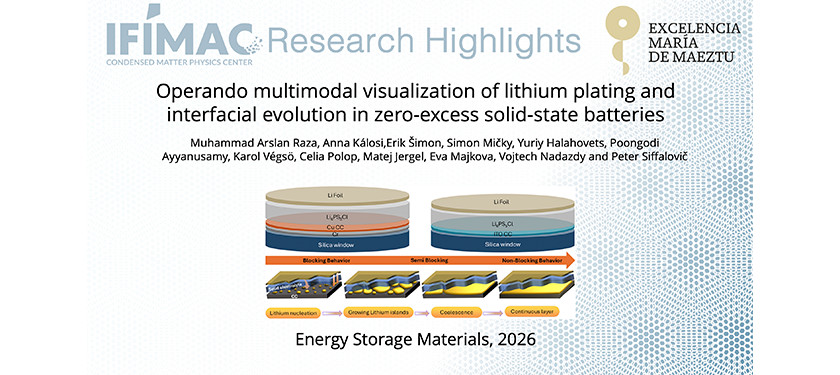
Zero-excess solid-state batteries (ZESSBs) are promising next-generation energy storage systems, having potentially high energy density and improved safety. In situ, electrodeposited lithium anodes exhibit a notable advantage over thick lithium metal anodes by reducing gravimetric energy density. However, non-uniform electrochemical lithium plating leads to capacity degradation and cell short circuits, which remain major challenges. Lithium nucleation density and subsequent plating in ZESSBs are controlled by two primary factors: (1) the surface energy and chemical reactivity (alloying behavior) of the current collector (CC) with Li, and (2) the surface topography. In order to isolate the influence of interfacial chemistry, we employ nanometrically flat interfaces and a multi-modal operando framework. For this purpose, we utilize a custom-engineered high-pressure optical cell (designed to withstand 50 MPa) that enables simultaneous top-view optical microscopy, confocal Raman microspectroscopy, and galvanostatic electrochemical impedance spectroscopy (GEIS). We followed in situ anode formation at a nanoscale flat interface between CC (Cu and ITO) and Li6PS5Cl solid-state electrolyte (SSE). Operando optical microscopy and Raman microspectroscopy revealed that ITO promotes homogenous lithium nucleation and leads to faster interface stabilization than bare Cu. In addition, GEIS analysis quantifies that ITO/SSE interface exhibits one order of magnitude lower charge transfer resistance than Cu/SSE. This work provides a methodological template for probing buried interfaces and underscores the need for lithophilic alloying interlayers to realize stable, high-rate ZELMBs. [Full Article]